 JAMES
Autonomous Marketing
Autonomous marketing isn’t a piece of software you rent. It’s a machine you actually own.
Hey, I’m James Jernigan. For the last seven years, I’ve been building the exact systems that write my articles, publish my books, and process my payments, all while I’m nowhere near a keyboard. Just one guy, zero employees, and no bloated SaaS subscriptions eating up the profits. This page pulls back the curtain on how the whole thing runs, and how you can build your own.
Three books. Over 10,000 subscribers. One funnel demoed live on stage by Russell Brunson in front of 20,000 people.

THE DEFINITION
What autonomous marketing actually means here.
If you look up “autonomous marketing,” almost every definition you’ll find was written by a software company trying to sell you a monthly plan. They talk about AI agents running campaigns inside a dashboard you rent, where they hold your data, they control the workflow, and they own the keys to your account. Funny how convenient that definition is for them, right?
Here’s how I look at it: autonomous marketing is an operation that keeps moving forward when nobody is sitting there pushing buttons. Your content goes live. Your follow-up emails go out. Your products get delivered. Your invoices get paid. Instead of spending your day babysitting a dozen different apps, you get to spend your brainpower on high-level decisions.
The whole game comes down to one word: ownership. If your business grinds to a halt the second you cancel a subscription, you didn’t build an asset. You just rented an outcome. When your system runs on hardware and accounts you control, you own the machine that prints the results. That’s the exact reason you’re reading a real website right now instead of sitting through a two-hour fake-live webinar.
I built this for solopreneurs, small business owners, side hustlers, and anyone else who wants to stay lean on purpose. Sure, bigger teams can use it too, but it was forged in the trenches for people doing it on their own.
THE STORY
How I got here.
It started with flipping stuff online
eBay, Poshmark, OfferUp. I’d hunt down deals, buy things cheap, and flip them for a profit. It worked, right up until I hit a massive wall. More sales meant more inventory. More inventory meant paying for storage. And the only way to make an extra dollar was to pack another box myself. I hadn’t built a business; I had just bought myself a second full-time job.
So I moved into digital
I taught myself SEO and started selling it to clients back when ranking a webpage was the entire game. Getting real results was the only pitch that ever worked, which forced me to learn what actually moves the needle for a business online. Still, I hit another ceiling: trading hours for dollars. My income was hard-capped by how many sales calls I could cram into a week.
Then I started building my own products
Courses, PDFs, digital offers, and affiliate promotions. That pivot brought in five figures in commissions, including a third-place finish in a major affiliate competition. That was the first time money hit my bank account without my calendar being booked solid, and once you feel that difference, you can never go back.
Next, I automated the boring half
Publishing, follow-ups, product delivery, reporting. All the repetitive grunt work nobody wants to do, yet everybody has to get done. I wired up systems to handle it all automatically, then spent the next few years making them faster and leaner. My work hours shrank while my output exploded, which is the entire point of everything on this page.
And then I took the whole thing on the road
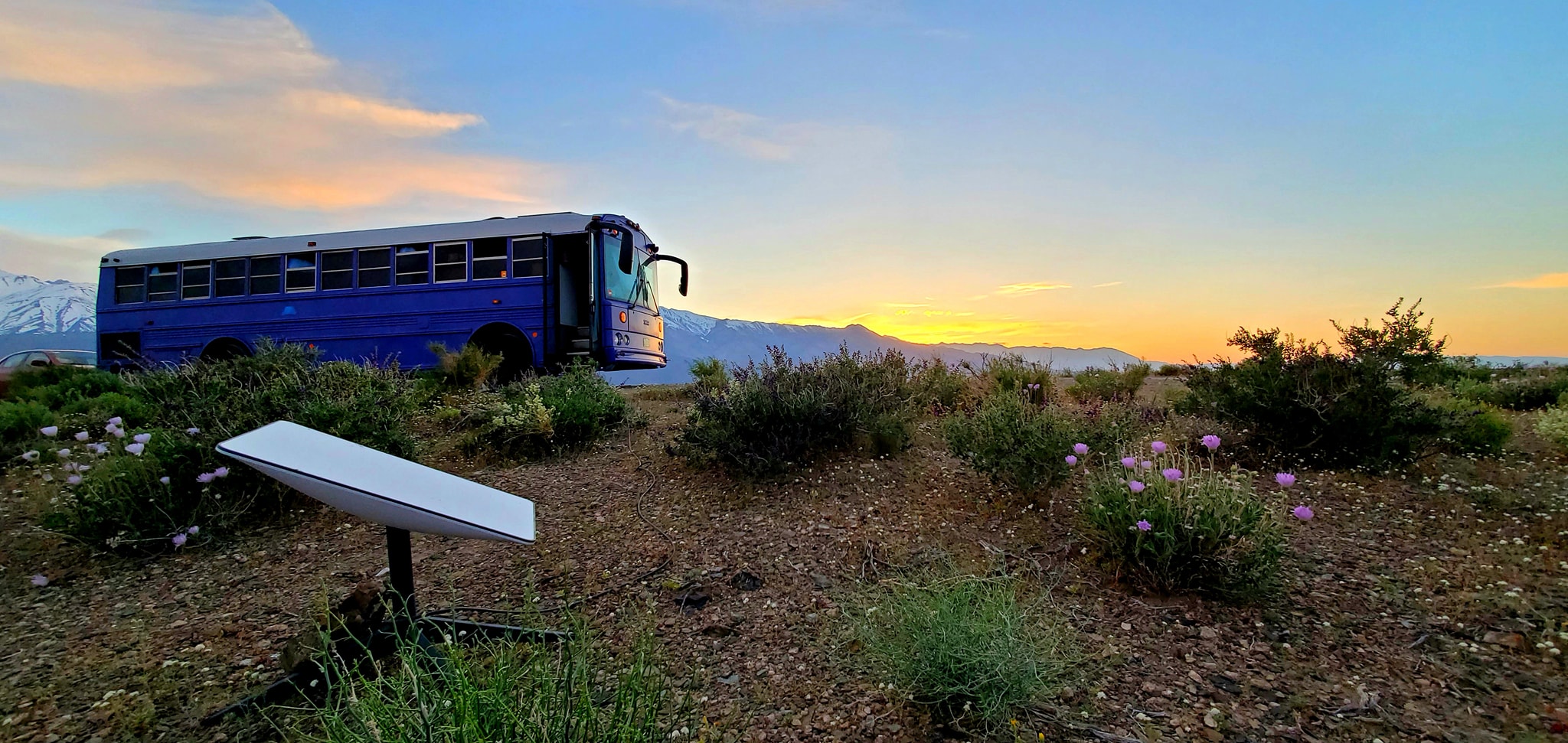
Back in 2022, I bought a 35-foot school bus and converted it into a rolling home and office. From 2022 to 2024, I traveled across the country living entirely off the income these online systems generated. No, it wasn’t “sit on a beach and do nothing” passive income, and it wasn’t a two-year vacation. It was real work, done from wherever I happened to park, powered by systems that let one person put out the work of an entire agency. That was the moment this stopped being a neat productivity hack and became a completely different way to live.
Everything I teach today follows that exact same path: using smart tech to build an asset that pays you for your judgment, not your hours.
THE PROOF
What backs this up.
The Hands-Free Business (2026)
My flagship book on running a lean business with AI agents instead of payroll. It’s the entire philosophy of this page, broken down into 12 practical chapters.
Social Media Engineering (2025) and the AI SEO Book (2026)
Two more field manuals on building your own growth machines instead of paying rent to someone else’s platform.
Over 10,000 subscribers on YouTube
Built over five years of documenting my SEO and AI experiments out in the open, long before everyone jumped on the bandwagon. Thousands of people have watched me build this brick by brick in real time.
Five figures in affiliate commissions
Including a third-place trophy in a competitive affiliate launch, which is proof that these systems convert just as well when you’re selling someone else’s offer.
Published research on AI search and influence operations
Written from the perspective of a street-smart marketer, not a Silicon Valley engineer, because I’m not one.
Two moments that proved the machine works.
Russell Brunson pulled up one of my funnels live on stage.
It happened during the OfferLab launch in front of more than 20,000 people. Let’s be clear about what that means: he didn’t endorse my business, and I don’t pretend he did. It means my funnel converted well enough out in the wild that he chose it as his live example.
The founder of Syllaby brought me in to train his community.
I ran a private masterclass for his members, walking them step by step through the exact automation systems I use every single day.
THE SYSTEM
What the system does while I’m doing something else.
None of this is theory I pulled out of a textbook. This exact setup is what powers the website you’re looking at right now.
It publishes.
Articles get drafted, structured, marked up, and scheduled automatically, going live on a calendar I control. I review everything before it ships, while the machine handles the formatting, internal linking, and schema behind the scenes.
It ships my books.
My KDP pipeline takes a rough outline and turns it into a compiled manuscript with a print-ready interior, so writing a book doesn’t trap me into becoming a full-time typesetter.
It sells and follows up.
Checkout, digital delivery, receipts, and the welcome email that lands the second someone buys. Nobody has to be awake for any of it. It never asks for weekends off.
That exact stack is the single product I offer. It’s called the installer. If you want to build it yourself from scratch, grab the free checklist further down. If you want it done fast, the installer is waiting.
THE LIMITS
What this does not do.
It won’t replace good taste.
Systems can publish at scale, but they can’t decide what’s actually worth saying. A website flooded with well-formatted fluff is worse than a quiet one.
It won’t run unattended forever.
AI models update, APIs change, and plugins break. Someone still has to keep an eye on the dashboard, and right now, that someone is me.
It won’t save a bad offer.
If nobody actually wants what you’re selling, automation just helps you discover that fact a whole lot faster.
It won’t film your videos or manage your paid ads.
It writes, it publishes, it delivers, and it sells. I’d rather lay that out straight right here than have you find out after pulling out your wallet.
It doesn’t require a team, a retainer, or another monthly bill.
That part is 100% real, and it’s the whole reason I built it in the first place.
THE OUTPUT
What I publish.
A system is only as good as what it actually produces. Here is a look at what mine puts out:
The Complete Answer Engine Optimization Guide
The full method for getting found in AI answers, from structure to schema.
Why Your Top-Ranking Pages Are Invisible to AI Search
Ranking in Google and being quoted by ChatGPT are two different problems.
How to Optimize Existing Posts for AI Fan-Out Queries
The sub-questions an engine asks on your behalf, and how to answer them on the page.
WordPress Schema Markup for AI Search
The exact JSON-LD setup this site runs, with nothing abstract in it.
THE NEXT STEP
Start where it makes sense for you.
Build it yourself
Grab my free 14-page checklist. It’s the exact blueprint I used to wire all of this together. It won’t turn you into a programmer, and it won’t lie to you and say it takes five minutes.
Buy the system I built
The installer deploys this exact stack straight onto your own machine. One product, one flat price, zero subscriptions.
Or just follow along
I drop new breakdowns right here on the blog and over on YouTube every single week. No pitch, no gate.
QUESTIONS
Straight answers.
Is this just marketing automation with a fancy new name?
Not even close. Traditional automation just follows rigid if-this-then-that rules you have to babysit. Autonomous systems make routine judgment calls inside guardrails you set. You feel the difference the very first week you get sick, go out of town, or get buried in real life.
Do I need to know how to code?
Nope. I’m not a developer. I run Linux, a basic terminal, and a handful of APIs, and I learned every single bit of it out in public by trial and error.
What does it actually cost to run?
Roughly 20 dollars a month to power my entire operation on DeepSeek. Your exact bill will depend on which AI models you plug in and how much volume you push through it.
Why do you only sell one product?
Because almost everything pitched to solo operators today is a recurring subscription for tools you should own outright. I’d rather sell you one solid machine once and let my free content do the heavy lifting for everything else.
Will AI content get my site penalized?
Lazy, thin content gets sites penalized. Publishing high-volume garbage without human judgment gets sites penalized. A system that captures your real thinking and publishes it at a pace you could never maintain manually is a completely different animal, and it’s the only approach I’ll ever teach.